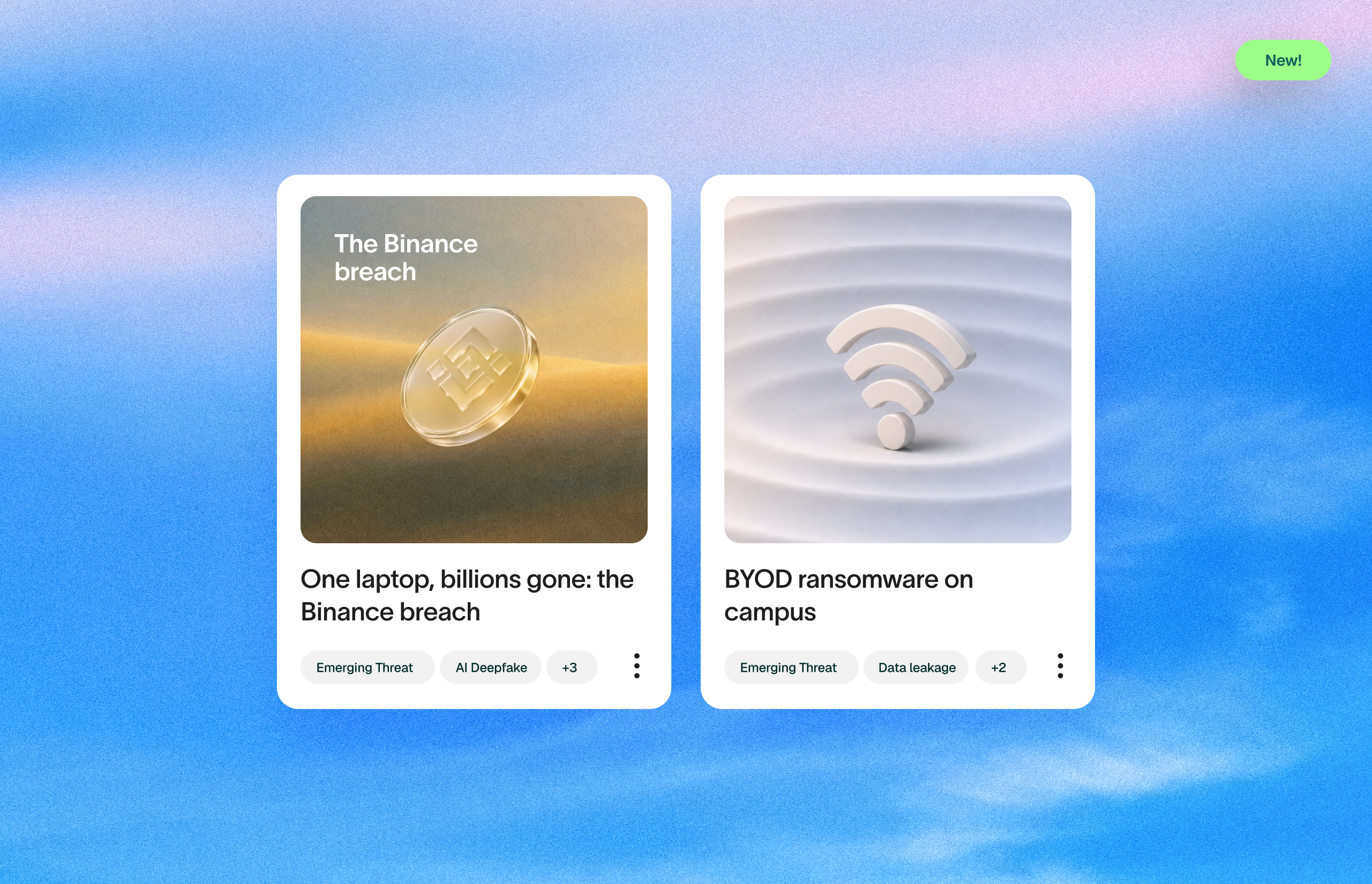
Two new briefings cover attacks whose first signs look completely ordinary. The first is the October 2026 Binance breach, where a fake job interview and a take-home coding assignment on one engineer’s laptop led to billions of dollars moved in about twenty minutes. The second is BYOD, a new ransomware group targeting universities, where the earliest warning can look like a laptop just having a bad day.
What’s new
- One laptop, billions gone: the Binance breach: A briefing for engineers on the hiring scam behind the Binance breach, where a fake recruiter, two staged interviews, and a malicious coding assignment gave attackers a foothold on a work device with production access. It covers how the lure was built, how the attackers moved from one laptop to the signing service, and what to do with unsolicited recruiter outreach.
- BYOD ransomware on campus: A briefing for students, faculty, and staff on BYOD, a ransomware group that has hit Michigan State University, the University of New Mexico, and Vanderbilt University since late September 2026. It covers why campuses are attractive targets, the early warning signs that look like everyday glitches, and what to do the moment something seems off.
Why it matters
Nothing exotic broke at Binance. New, obfuscated malware in a coding assignment slipped past endpoint security, and from one laptop attackers reached the credentials they needed. The rule: never run interview code or unvetted repositories on a company device.
Campuses connect thousands of personal devices to shared networks, and BYOD has already stolen student and employee records. Its early signs look like everyday glitches. The habit that stops it: don’t troubleshoot, shut the device down, and report it right away.
How to access it: These briefings are available in the Fable Catalog. Navigate to the Catalog in the Fable platform to find and deploy them.