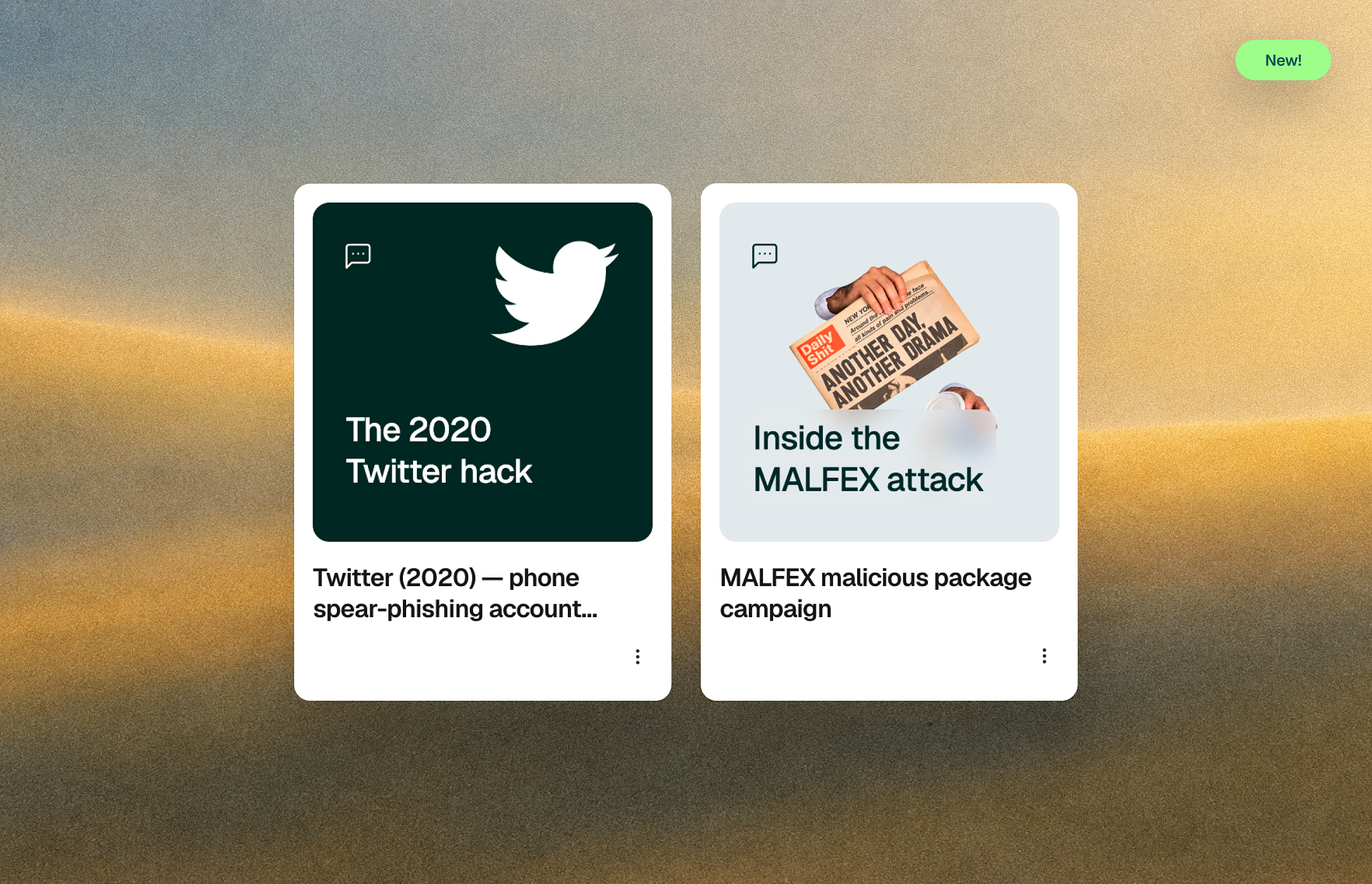
Two new briefings cover attacks that worked because the request looked routine. The first is the 2020 Twitter hack, where callers posing as the internal IT help desk talked remote employees into entering credentials on a fake VPN login page. The second is MALFEX, a set of malicious npm packages that ran code on developers’ machines the moment they were installed.
What’s new
- Twitter (2020) phone spear-phishing account hijack: A briefing for all employees on how a fake IT help desk call, a VPN “fix,” and a spoofed login page led to the takeover of high-profile accounts like Apple, Elon Musk, and Barack Obama. It covers why a caller doesn’t need to sound suspicious to be dangerous and the habit that stops the attack.
- MALFEX malicious package campaign: A briefing for developers on how eight malicious npm packages, downloaded more than 40,000 times, used an install-time hook to run malware on Windows machines. It covers the signals to watch for, including install scripts, indirect dependencies, poisoned releases of trusted libraries, and AI- or chat-suggested packages.
Why it matters
The Twitter attack started with a plausible story: a caller offering to fix a VPN issue for remote employees. It ended with 130 accounts targeted and more than $118,000 in Bitcoin stolen. The habit that stops it: if someone unexpectedly asks you to log in or approve access, verify through a trusted channel first.
Attackers count on install being a reflex. One MALFEX package looked harmless but pulled in another that carried the malware. The rule: treat every new dependency as a reviewable change, and confirm a suggested package exists before you install it.